graph LR
A[最短路] --> B[单源最短路]
A --> C[多源汇最短路]

B --> D[所有边权都是正数]
B --> E[存在负权边]

D --> D1["朴素 Dijkstra 算法 <br/> O(n²)"]
D --> D2["堆优化版的 Dijkstra 算法 <br/> O(m log n)"]

E --> E1["Bellman-Ford <br/> O(nm)"]
E --> E2["SPFA <br/> 一般 O(m), 最坏 O(nm)"]

C --> C1["Floyd 算法 <br/> O(n³)"]

单源最短路

正数边权

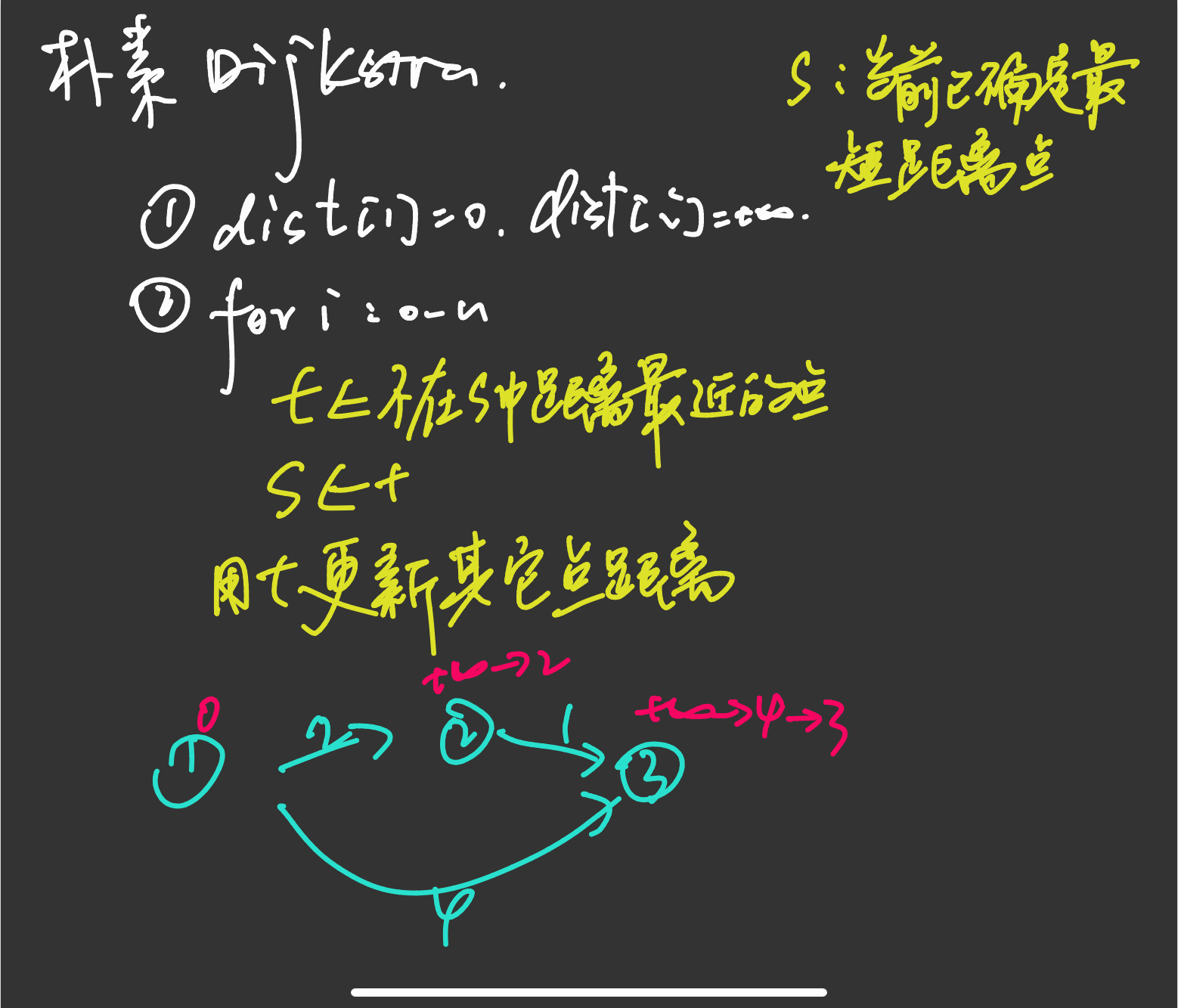
朴素Dijkstra(稠密)

https://www.acwing.com/problem/content/851/

IMG_403C58EADACD-1

1
2
3
4
5
6
7
8
9
10
11
12
13
14
15
16
17
18
19
20
21
22
23
24
25
26
27
28
29
30
31
32
33
34
35
36
37
38
39
40
41
42
43
#include <bits/stdc++.h>
using namespace std;

const int N = 510;
int n, m;
int g[N][N];//存两点间长度
int dist[N];//存1到某点距离
bool st[N];//是否走过

int dijkstra()
{
memset(dist, 0x3f, sizeof dist);//初始化距离
dist[1] = 0;//标记初始点
for (int i = 0; i < n; i++)
{
int t = -1;//保证t一定会变
for (int j = 1; j <= n; j++)
if (!st[j] && (t == -1 || dist[t] > dist[j]))
t = j;//找出未标记的最近点

st[t] = true;//标记走过

for (int j = 1; j <= n; j++)
dist[j] = min(dist[j], dist[t] + g[t][j]);//用t更新临近点的最短路
}
if (dist[n] == 0x3f3f3f3f)//走不通
return -1;
return dist[n];
}

signed main()
{
cin >> n >> m;
memset(g, 0x3f, sizeof g);//初始化两点距离数组
while (m--)
{
int a, b, c;
cin >> a >> b >> c;
g[a][b] = min(g[a][b], c);//两点有多条赋权边,因此保留最短
}
int t = dijkstra();
printf("%d", t);
}

堆优化版Dijkstra

https://www.acwing.com/problem/content/852/

1
2
3
4
5
6
7
8
9
10
11
12
13
14
15
16
17
18
19
20
21
22
23
24
25
26
27
28
29
30
31
32
33
34
35
36
37
38
39
40
41
42
43
44
45
46
47
48
49
50
51
52
53
54
55
56
57
58
59
60
61
62
63
#include <bits/stdc++.h>
using namespace std;
typedef pair<int, int> PII;
const int N = 150010;
int n, m;
int e[N], w[N], h[N], ne[N], idx;
int dist[N];
bool st[N];

void add(int a, int b, int c)
{
e[idx] = b;
w[idx] = c;//赋权边
ne[idx] = h[a];
h[a] = idx++;
}//邻接表基操

int dijkstra()
{
memset(dist, 0x3f, sizeof dist); // 初始化距离
dist[1] = 0; // 标记初始点

priority_queue<PII, vector<PII>, greater<PII>> heap; // 建堆
heap.push({0, 1});

while (heap.size())
{
auto t = heap.top();
heap.pop();

int ver = t.second, distance = t.first;
if (st[ver])
continue;//确定最短边直接过
st[ver] = true;
for (int i = h[ver]; i != -1; i = ne[i])
{
int j = e[i];
if (dist[j] > distance + w[i])
{
dist[j] = distance + w[i];
heap.push({dist[j], j});//入堆
}
}
}

if (dist[n] == 0x3f3f3f3f) // 走不通
return -1;
return dist[n];
}

signed main()
{
cin >> n >> m;
memset(h, -1, sizeof h);
while (m--)
{
int a, b, c;
cin >> a >> b >> c;
add(a, b, c); // 建边
}
int t = dijkstra();
printf("%d", t);
}

存在负权边

bellman-ford

https://www.acwing.com/activity/content/problem/content/922/

1
2
3
4
5
6
7
8
9
10
11
12
13
14
15
16
17
18
19
20
21
22
23
24
25
26
27
28
29
30
31
32
33
34
35
36
37
38
39
40
41
42
43
44
45
46
#include <bits/stdc++.h>
using namespace std;
#define int long long
const int N = 510, M = 10010;
int n, m, k;
int dist[N], backup[N];

struct edge
{
int a, b, w;
} edge[M];

int bellman()
{
memset(dist, 0x3f, sizeof dist);
dist[1] = 0;
for (int i = 0; i < k; i++)
{
memcpy(backup, dist, sizeof dist);
for (int j = 0; j < m; j++)
{
int a = edge[j].a, b = edge[j].b, w = edge[j].w;
dist[b] = min(dist[b], backup[a] + w);
}
}
return dist[n];
}

signed main()
{
ios::sync_with_stdio(false);
cin.tie(nullptr);

cin >> n >> m >> k;
for (int i = 0; i < m; i++)
{
int a, b, w;
cin >> a >> b >> w;
edge[i] = {a, b, w};
}
int t = bellman();
if (t > 0x3f3f3f3f / 2)
puts("impossible");
else
cout << t << endl;
}

sofa(bellman-ford优化)

1
2
3
4
5
6
7
8
9
10
11
12
13
14
15
16
17
18
19
20
21
22
23
24
25
26
27
28
29
30
31
32
33
34
35
36
37
38
39
40
41
42
43
44
45
46
47
48
49
50
51
52
53
54
55
56
57
58
59
60
61
62
63
64
65
66
#include <bits/stdc++.h>
using namespace std;
typedef pair<int, int> PII;
const int N = 1e6 + 10;
int n, m;
int e[N], w[N], h[N], ne[N], idx;
int dist[N];
bool st[N];

void add(int a, int b, int c)
{
e[idx] = b;
w[idx] = c;
ne[idx] = h[a];
h[a] = idx++;
}

int spfa()
{
memset(dist, 0x3f, sizeof dist); // 初始化距离
dist[1] = 0; // 标记初始点

queue<int> q;
q.push(1);
st[1] = true;

while (q.size())
{
int t = q.front();
q.pop();
st[t] = false;

for (int i = h[t]; i != -1; i = ne[i])
{
int j = e[i];
if (dist[j] > dist[t] + w[i])
{
dist[j] = dist[t] + w[i];
if (!st[j])
{
q.push(j);
st[j] = true;
}
}
}
}

return dist[n];
}

signed main()
{
cin >> n >> m;
memset(h, -1, sizeof h);
while (m--)
{
int a, b, c;
cin >> a >> b >> c;
add(a, b, c); // 建边
}
int t = spfa();
if (t == 0x3f3f3f3f)
puts("impossible");
else
cout << t << endl;
}

spfa在思路上是belman-ford优化,但是代码上更接近堆优化Dijkstra

Q:为什么如果 j 已经在队列里,就没必要重复放。否则队列里会有很多重复点,效率变差

A:比如一个点 j 已经在队列里等着被处理了,这时又有别的点把 dist[j] 更新得更小,如果不判断 st[j],就会再把 j 放进去一次,于是队列里就有重复的 j

举个图:

1
2
3
1 -> 2 权重 10
1 -> 3 权重 1
3 -> 2 权重 1

起点是 1

初始化:

1
2
queue: 1
dist[1] = 0

取出 1,它能更新:

1
2
dist[2] = 10
dist[3] = 1

于是把 23 放进队列:

1
queue: 2, 3

这时 2 已经在队列里了。

然后取出 3,发现:

1
3 -> 2 权重 1

可以把:

1
dist[2] = 10

更新成:

1
dist[2] = dist[3] + 1 = 2

此时 2 的距离变短了。

如果没有这个判断:

1
if (!st[2])

那就又会执行:

1
q.push(2);

队列会变成:

1
queue: 2, 2

这就是重复点。

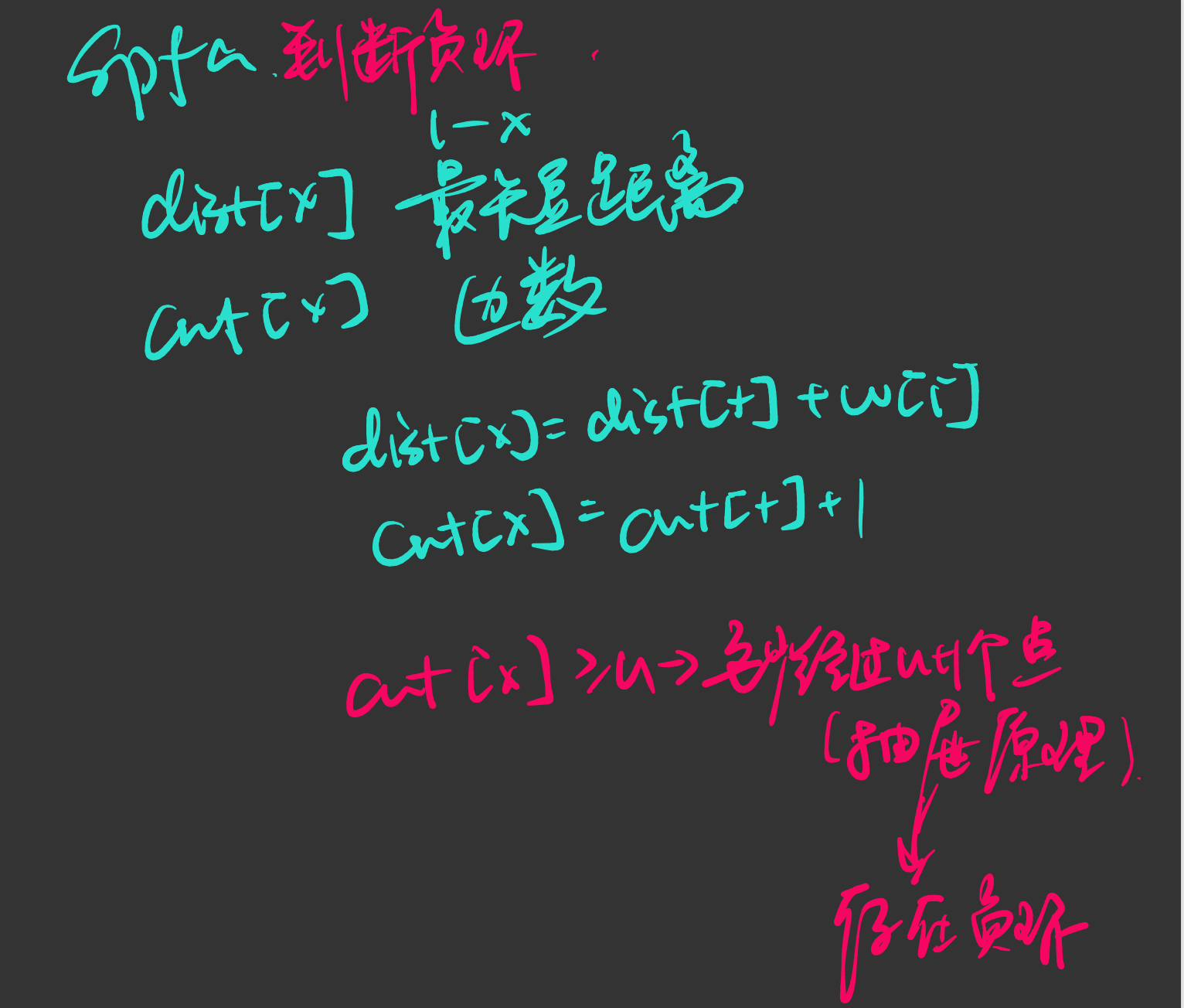
spfa求负环

IMG_690190CB95F6-1

基于最短路代码改几处即可

  1. 新建cnt数组用于存图
  2. 不需要初始化,因为不是求最短路绝对值关键是cnt
  3. 将所有点初始入队防止最短路不需要路过负环导致遗漏

多源汇最短路

Floyd

1
2
3
4
5
6
7
8
9
10
11
12
13
14
15
16
17
18
19
20
21
22
23
24
25
26
27
28
29
30
31
32
33
34
35
36
37
38
39
40
41
42
43
44
45
46
47
48
49
#include <bits/stdc++.h>
using namespace std;
const int N = 210, INF = 1e9;
#define int long long
int n, m, q;
int d[N][N];
void floyd()
{
for (int k = 1; k <= n; k++)
{
for (int i = 1; i <= n; i++)
{
for (int j = 1; j <= n; j++)
d[i][j] = min(d[i][j], d[i][k] + d[k][j]);
}
}
}
signed main()
{
ios::sync_with_stdio(false);
cin.tie(nullptr);
cin >> n >> m >> q;
for (int i = 1; i <= n; i++)
{
for (int j = 1; j <= n; j++)
{
if (i == j)
d[i][j] = 0;
else
d[i][j] = INF;
}
}
while (m--)
{
int a, b, w;
cin >> a >> b >> w;
d[a][b] = min(d[a][b], w);
}
floyd();
while (q--)
{
int a, b;
cin >> a >> b;
if (d[a][b] > INF / 2)
cout<<"impossible"<<endl;
else
cout << d[a][b] << endl;
}
}

三重循环